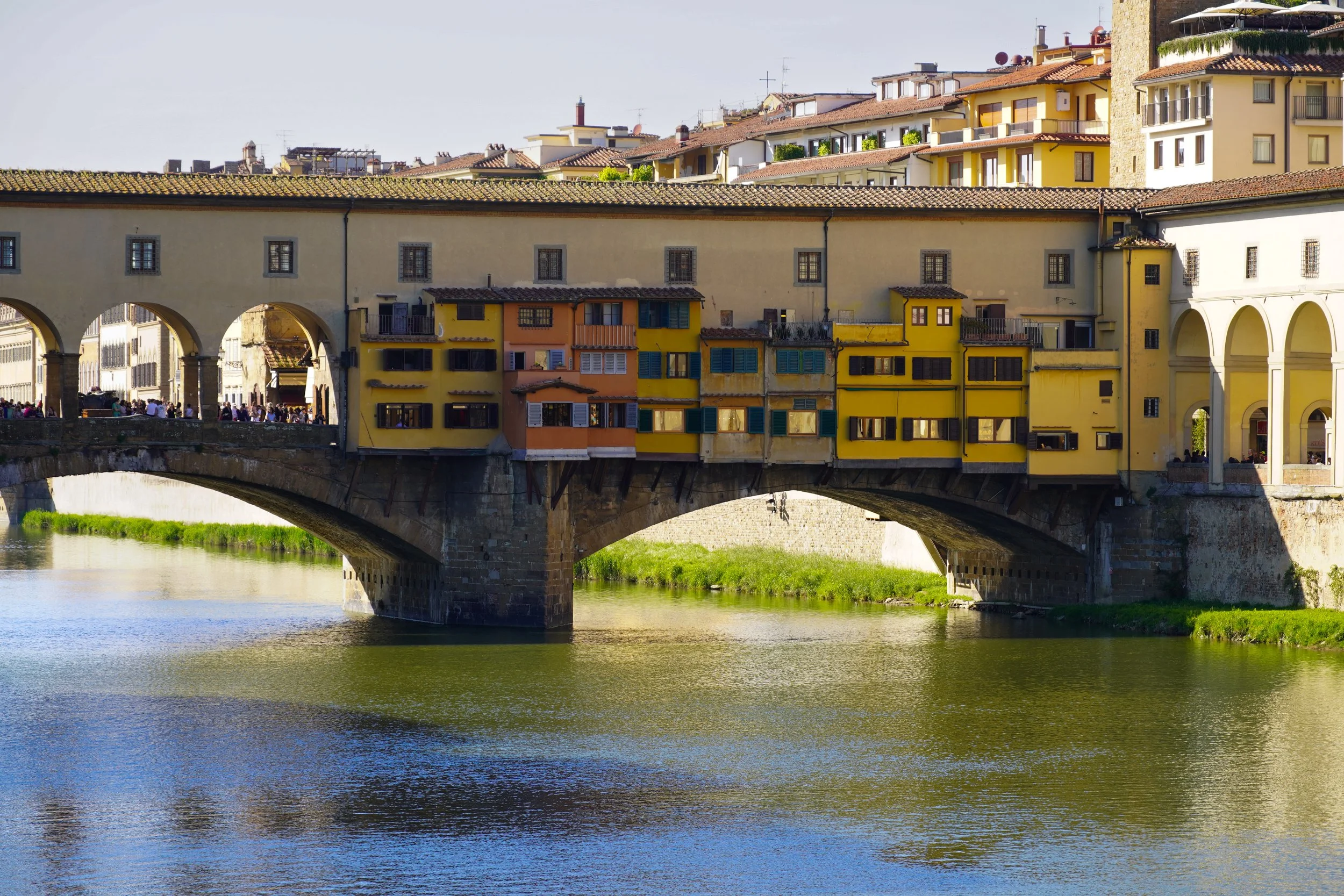
This entry was written in 2019 on a study abroad trip to Italy, and my first time in Florence. The photo included is from a recent (2024) trip to Italy, of the Ponte Vecchio.
It was a short day in Orvieto. The caves beneath us made up another city all on their own. We took a tour of them and only saw one or two caves out of the entire network that is underground Orvieto. Remnants of old wine cellars and olive oil mills were divided by other rooms previously used as pigeon coops. The caves extended to the edge of Orvieto’s charming hill and opened up to the land around it, providing a pleasant view even from underground. After the tour, the rest of the day was spent eating and exploring around the outskirts of the city. The sky grew dark, but we stayed out and continued tracing the pathways of the city.
We entered Florence, known to locals as Firenze, by climbing the stairs from the train station below. As we turned, we were diminished by the basilica standing tall before us. The streets were skinny (though not as skinny as in Assisi) and, like most areas of Italy, the buildings in Florence were tall. Not skyscraper tall, but like a distorted version of the stores we had back home. The stores paralleled the Arno River, which stretched out before us, and the Ponte Vecchio bridge with its own strip mall hovered over the wide, gentle water.
Every store along the bridge was filled with items much too expensive for my small wallet. Bouncers were stationed in every luxury clothing store, meant to keep thieves at bay, but they intimidated me from even stepping inside. Across the other side of the bridge was a “high end” gelato shop, which carved their gelato displays into delicious artwork.
We eventually turned away from the river to go explore outside the Uffizi and the Palazzo Vecchio. A street with carved statues lining either side opened up into the piazza, and we were brought into an outdoor museum featuring more sculptures, including a replica of the well-known, magnified statue of David across from us. We stopped here for a while, trying to comprehend how one person could carve an image so intricately out of a solid block of marble.
Eventually, we came to another basilica, possibly the largest structure of artwork I had ever seen in my life. I learned that the dome was planned to be part of the structure before they even knew how to build it, which fascinated me. Almost as wide as it was tall, it dominated the piazza. The tower along the side rose so high, my neck could barely crane to see it.
From here, we ventured down the road toward the market, where we learned how to haggle with the vendors. Four scarves for 25€; 5€ off this wallet if I buy that one as well; a 40€ purse for only 20€ if I agree to buy from you instead of him. This was how the market operated: noisy and crowded, more leather than you can imagine, and most importantly, we learned to say no. Funny enough, this might’ve been one of the highlights of the entire trip for me. While others were taken aback by the loud, insistent vendors, I found them to be generally kind, good-humored people.
Bags piled on our arms, we then came back around to the first basilica and got a look inside. Like the other churches we’d visited, this one was covered in frescoes with arched ceilings and a nativity scene in front of the altar. Coming out of the basilica, my energy began to wane, and I made my way down to the train station and, upon boarding the train, fell into a deep sleep as it rumbled along toward Orvieto.