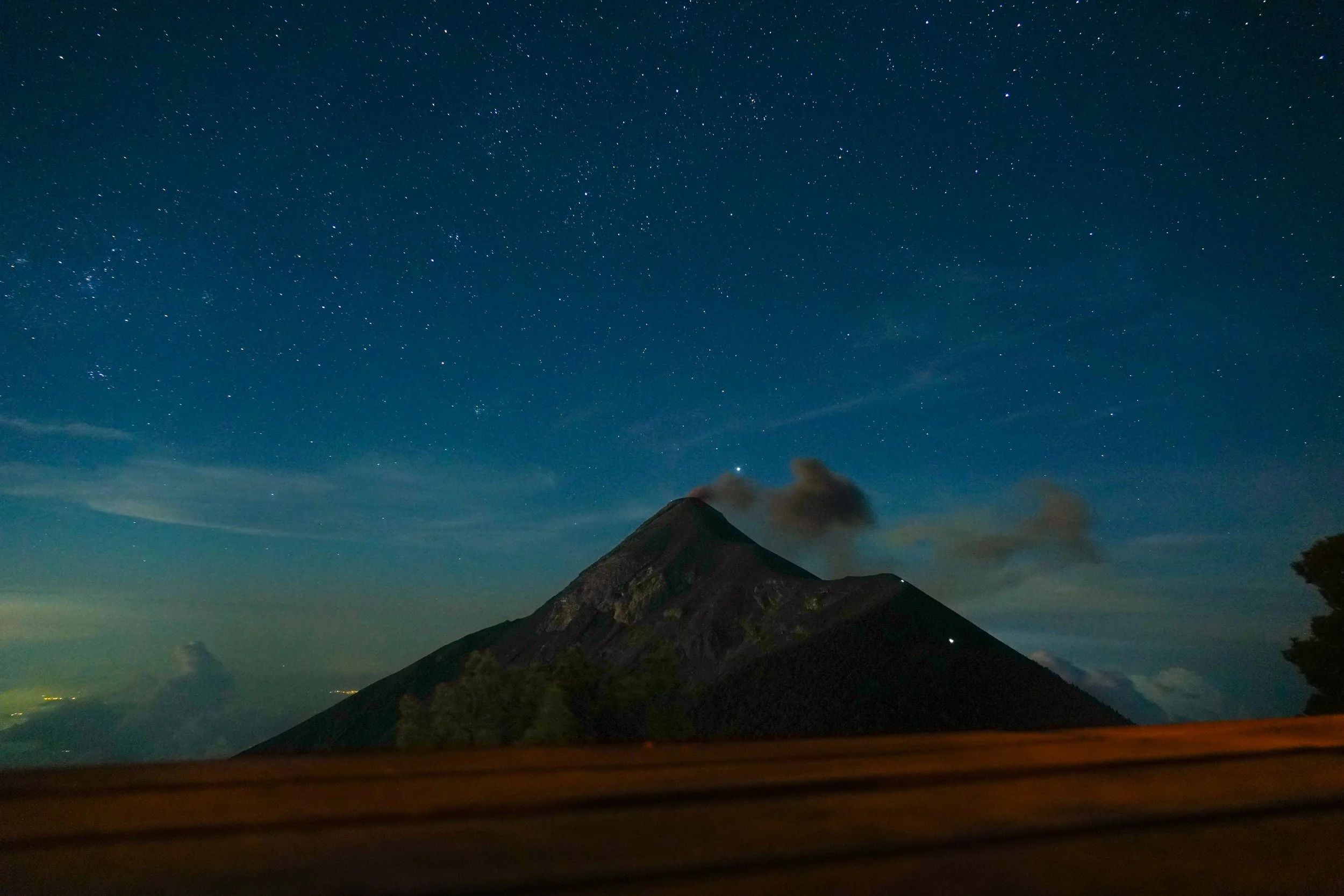
The three-part hike was slippery and strenuous. It took us over loose gravel paths, through a cloud rainforest, then subalpine and alpine forests. Our group was alone, save for Perrito—the dog (or, as we joked, “spirit guide”) who joined our hike and went all the way out to the ledge of the volcano before following us back down the mountain the next morning.
The day was sunny and warm but when night came, the temperature was below freezing and my rented jacket, hat, and gloves were barely enough to keep me from turning blue. We slept in cabins, which sounds nice (because it keeps the wind away), but they still had no heat. The sleeping pads felt like thin couch cushions—much better than sleeping directly on the ground, but they offered limited comfort.
All of this was outweighed by the window facing the volcano. The eruptions at night were incredible, glowing red and spewing from the top, trickling always down the one side. With eruptions every 15 minutes, Volcan de Fuego is one of the most continually active volcanoes in the world, and we were happy to sleep in intervals that night. While the eruptions aren’t loud, and you could certainly sleep through them if you wanted to, I found each one difficult to miss. We would doze for the quarter hour, then feel a slight rumble in the earth—bolting up out of bed to catch the fiery spray through our window, before settling back into the warmth of our sleeping bags.